
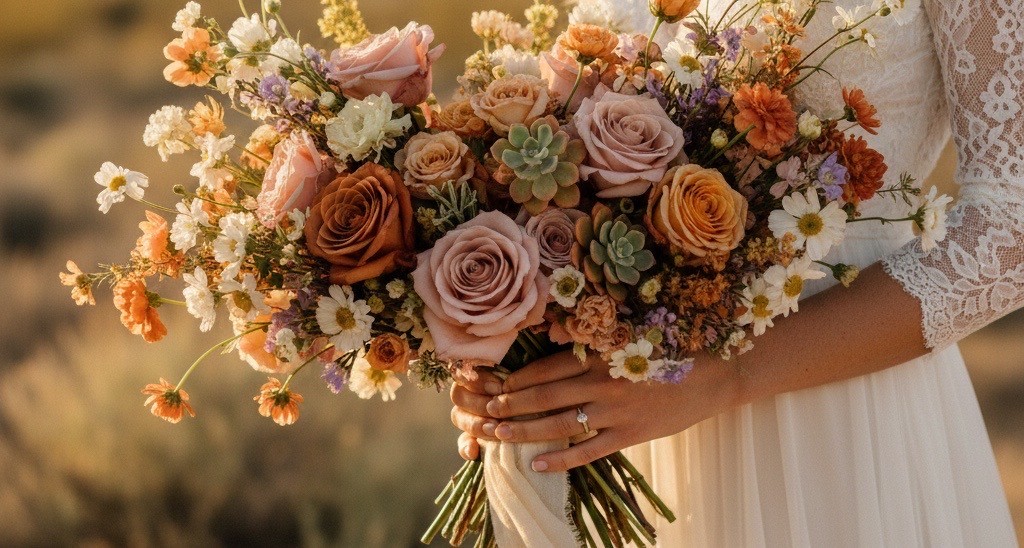
Discover the Most Beautiful Desert Flowers in Arizona
Discover the Most Beautiful Desert Flowers in Arizona
The short answer to "what are the prettiest desert flowers?" is this: some of the most striking blooms you’ll find in Arizona are the saguaro blossom, prickly pear flower, ocotillo, fairy duster, and desert marigold. These blooms capture the desert’s quiet drama—soft colors against rugged forms—and each carries a distinct season, texture, and emotional resonance.
Here's what you need to know: desert flowers are as much about place and light as they are about color. They tell a story of resilience and quiet celebration—perfect for couples who want florals with meaning. The key factors include bloom season, durability in heat, availability from ethical sources, and how the flower’s character complements your aesthetic.

Top 5 Prettiest Desert Flowers to Consider for Your Wedding
Saguaro blossom (Carnegiea gigantea)
Why it’s pretty: The saguaro blossom is emblematic of the Sonoran Desert—delicate white petals with a gentle yellow center, often open at dawn. Where you’ll see it: Phoenix and Tucson regions during late April to early June. Availability: Wild saguaro blooms are protected and not available as cut flowers; instead, florists often suggest saguaro-inspired accents or photographic references. Symbolism: endurance and timelessness. Practical note: please do not harvest from the wild; many venues feature saguaros in the landscape instead.
Prickly pear (Opuntia spp.)
Why it’s pretty: Prickly pear flowers offer saturated magenta, yellow, and orange hues and pair beautifully with paddle-shaped pads for a Southwestern look. Where you’ll see it: widespread throughout Arizona, blooming late spring into early summer. Availability: cultivated prickly pear flowers and pads are sometimes available through specialty growers. Durability: short-lived as cut flowers, but pads and preserved pads make dramatic, long-lasting accents. Cost: pads and potted specimens are often $10–$50 depending on size; fresh blossoms are seasonal and may carry a premium.
Ocotillo (Fouquieria splendens)
Why it’s pretty: Ocotillo’s tall spires studded with red tubular flowers create vertical drama and motion. Where you’ll see it: Sonoran deserts near Phoenix and Tucson, blooming late spring after rains. Availability: many florists source ocotillo branches for ceremony arches and installations rather than bouquets. Durability: excellent as structural pieces. Symbolism: transformation and bloom after hardship.
Fairy duster (Calliandra californica)
Why it’s pretty: Tiny, feathery red or pink blooms that read delicate and romantic at a distance. Where you’ll see it: southern Arizona and arid landscapes, often blooming spring through fall. Availability: commonly grown in native plant nurseries and suitable for use in mixed bouquets and boutonnières. Durability: good if kept cool and hydrated. Cost: typically modest—$2–$6 per stem as an accent.
Desert marigold and brittlebush (Baileya multiradiata / Encelia farinosa)
Why they’re pretty: Desert marigold brings cheerful golden daisies while brittlebush offers silver-gray foliage and butter-yellow clusters—both create sunlit palettes that read beautifully in photography. Where you’ll see them: expanses of the Sonoran and Mojave deserts; bloom best after winter rains in spring into early summer. Availability: both are available through native-plant growers as potted specimens or as cut stems when ethically sourced. Practical use: great for wildflower-inspired centerpieces and loose, airy bouquets.

How to Incorporate Desert Flowers into Your Wedding Theme
Using desert flowers means celebrating texture and season. Think in layers: sculptural elements (ocotillo, cacti pads), soft accents (fairy duster, marigold), and greenery (silver brittlebush or native sage). Below are practical ideas and timelines to help make choices that honor both beauty and stewardship.
Styling suggestions
- Bouquets: Anchor a bouquet with soft blooms (fairy duster, marigold) and add a few thornless succulent clippings for weight and contrast.
- Installations: Use ocotillo branches for ceremony arches or as vertical markers—paired with fairy duster for a romantic counterpoint.
- Tables: Low groupings of potted desert marigold or small succulents create lasting centerpieces that double as favors.
- Color palettes: Desert palettes are sun-bleached pastels, vivid cacti blooms, and warm golds—choose one dominant color and complement with subdued foliage.
Tasteful sourcing and sustainability
Because many desert species are native and protected, source from local growers or nurseries—never from the wild. For inspiration and practical sourcing tips, consult guides and floral trend reports; for example, several floristry resources and trend surveys discuss seasonal sourcing and sustainability according to The Knot's latest survey and as recommended by Brides magazine.
Next Steps: Finding and Selecting the Right Flowers for Your Day
Choosing desert flowers is part design decision and part logistics. The process becomes easier when you break it into steps and communicate openly with your florist. The key factors include bloom season, heat tolerance, thorn presence, and whether you want fresh, potted, or preserved elements.
Practical timeline and budget
- 3–6 months before: Research local native plant nurseries and florists familiar with desert blooms. Check regional resources like Visit Arizona for seasonal insights and garden destinations.
- 2–3 months before: Ask your florist for a sample palette and possible seasonal substitutions—request photos of previous desert-inspired work.
- 4–6 weeks before: Confirm final counts and request clear notes on sourcing and handling. Plan for potted pieces to arrive earlier so they can be acclimated rather than stressed by the heat.
- Budget note: depending on rarity and handling, expect desert specialty stems to range widely—common accents and succulents may be $2–$8 each; structural branches or rare cultivated blooms can range from $10–$40 per piece. Always ask for line-item pricing.
Where to learn more locally
For native-plant expertise and stewardship guidance, regional institutions are invaluable. The Arizona-Sonora Desert Museum and local native plant societies can advise on bloom timing and ethical practices. They’re especially helpful if you’re drawn to dramatic, site-specific looks that honor the landscape.
Weddings are sacred days—filled with memory-making light, scent, and color. The desert’s palette lends itself to moments that feel thoughtful and deeply rooted in place. If you choose desert florals, lean into their stories: the long wait for bloom, the resilience after rain, the quiet beauty of a sunlit petal.
These moments deserve to be preserved. At Heartcraft Wedding Films, we understand that every detail of your Arizona wedding journey matters. From the planning stages to your sacred day, we're here to capture it all with artistry and care.
See Our Work in Action
Watch one of our recent Arizona wedding films to see our cinematic storytelling in action:

Instagram
Youtube
TikTok
Pinterest
Website
Facebook
Mail
Google Plus